Whatsapp
Article Summary: Reliable medium-voltage protection requires more than simply interrupting a fault. Utilities and industrial operators also need fast switching, stable mechanical performance, low maintenance requirements, and compatibility with increasingly intelligent distribution networks. An Outdoor Permanent Magnet Circuit Breaker combines vacuum interruption technology with a permanent magnet operating mechanism to address these requirements. This article explains how the technology works, where it can be applied, what technical factors should be evaluated before purchase, and how it can help reduce operational challenges in modern power distribution systems.
Medium-voltage distribution networks operate under demanding conditions. A fault on a feeder, transformer connection, industrial bus, railway power system, or renewable-energy installation can interrupt electricity supply and potentially damage valuable equipment. The circuit breaker is therefore a critical part of the protection chain.
However, modern operators face several challenges at the same time. Equipment may be installed outdoors where it is exposed to moisture, dust, ultraviolet radiation, temperature changes, and other environmental stresses. At the same time, distribution networks are becoming more automated, creating demand for equipment that can respond consistently to electrical commands and communicate with intelligent protection and control systems.
Traditional mechanically operated breakers can perform effectively, but their operating mechanisms contain multiple moving parts. Mechanical wear, adjustment requirements, and inconsistent operation over long service periods can become concerns, particularly in installations requiring frequent switching.
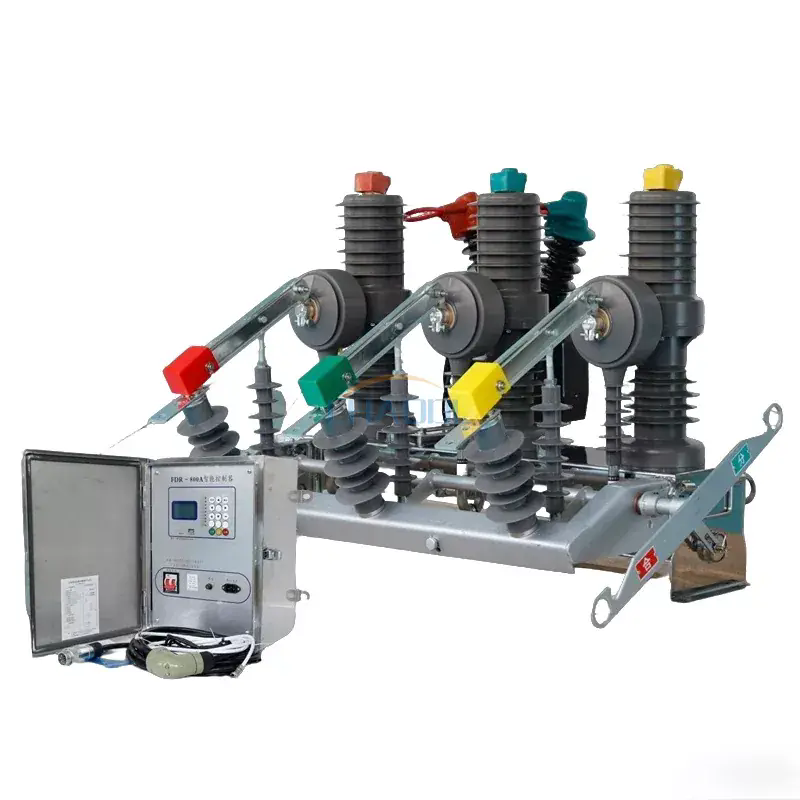
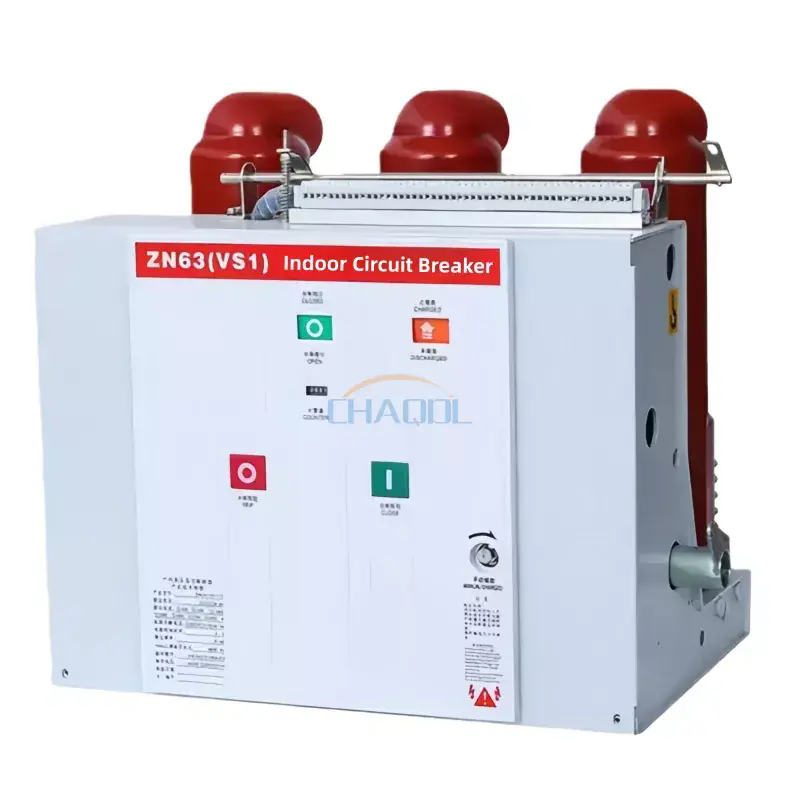
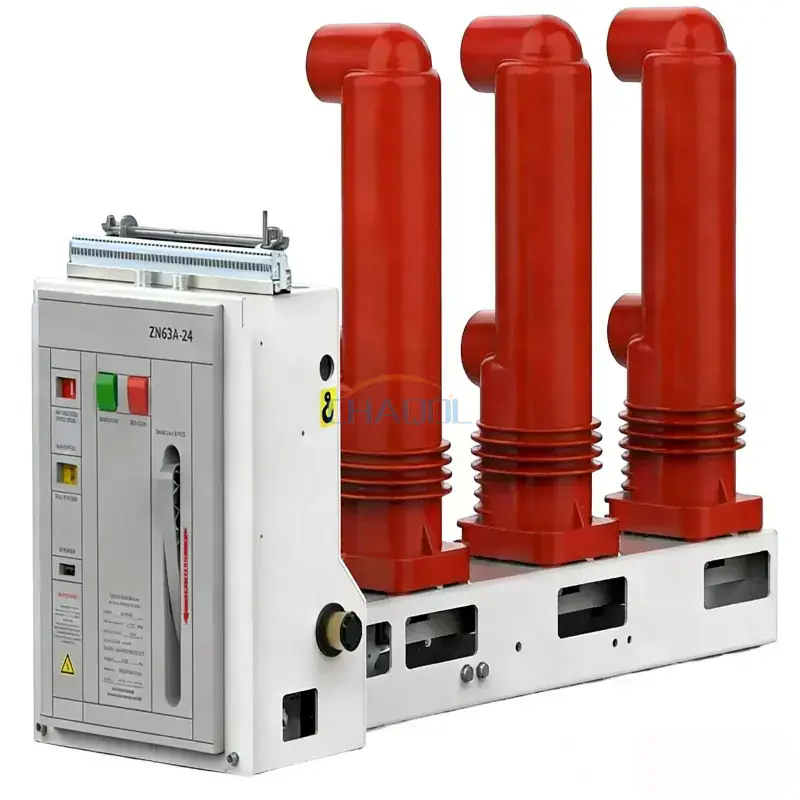
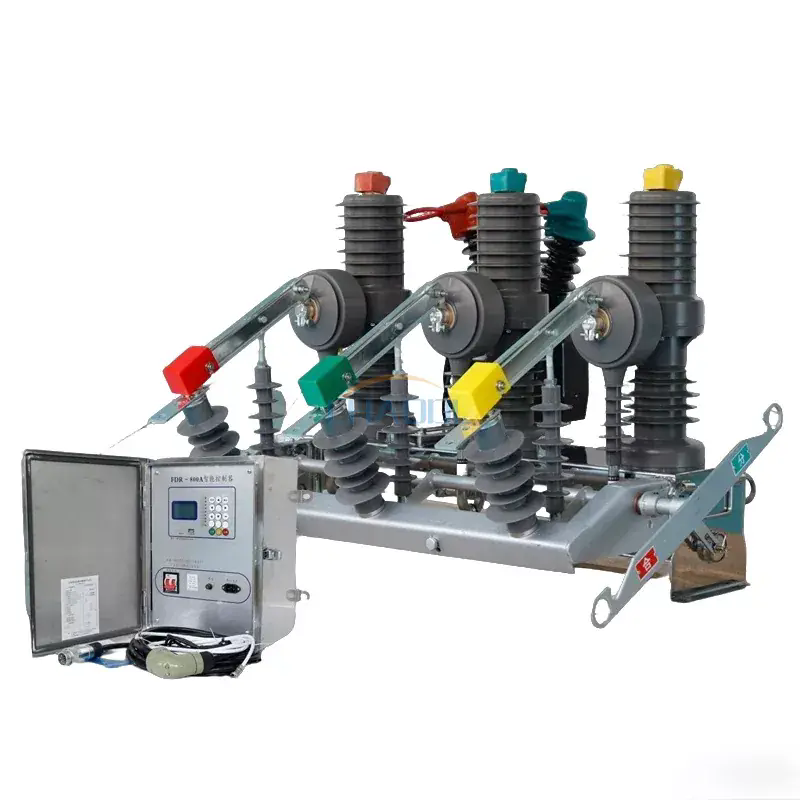
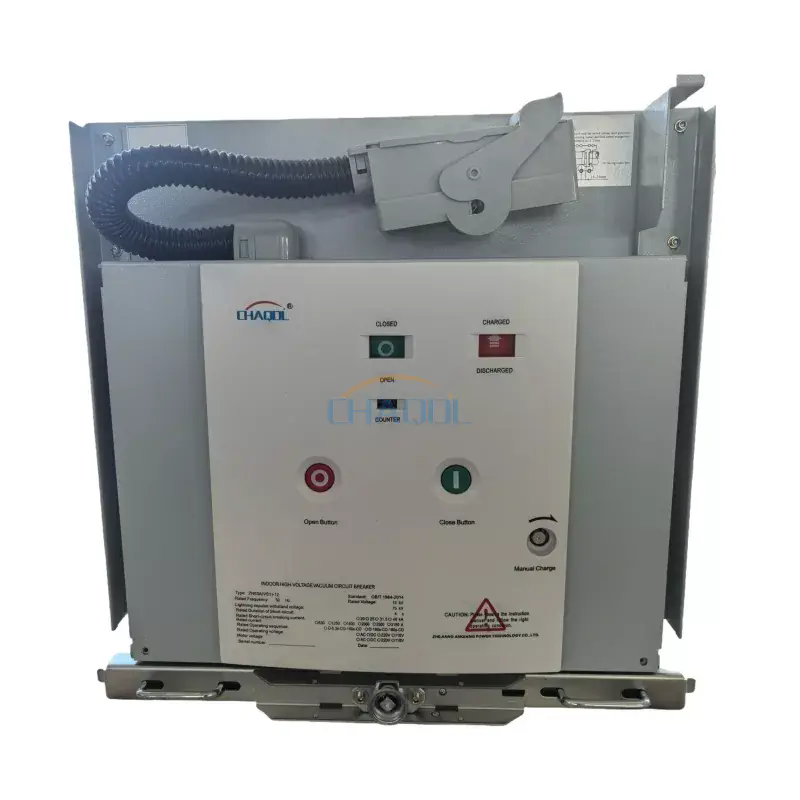
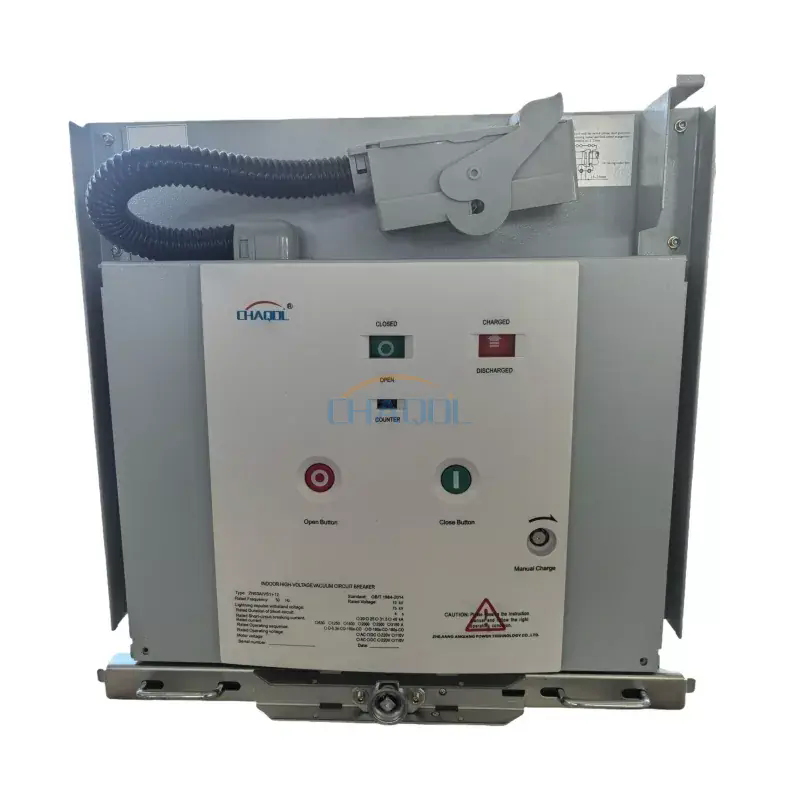
An Outdoor Permanent Magnet Circuit Breaker addresses these challenges by combining a vacuum interrupter with a permanent magnet actuator. The result is a compact medium-voltage switching solution designed for reliable operation, reduced mechanical complexity, and integration into modern distribution systems.
The operating principle is based on two essential technologies: vacuum interruption and permanent magnet actuation.
During normal operation, the circuit breaker allows current to flow through its conductive path. When the protection system identifies an abnormal condition, the operating mechanism receives a command to open the contacts. The permanent magnet actuator drives the mechanism, separating the contacts inside the vacuum interrupter.
When the contacts separate, an electrical arc may form briefly. Because the contacts are located inside a vacuum interrupter, the arc is rapidly extinguished as the current passes through its natural interruption point. The circuit is then electrically isolated from the fault.
For closing operations, the actuator moves the contacts back into their required position. The controlled movement helps provide repeatable switching performance.
This operating sequence can be summarized as follows:
The combination of these technologies is particularly useful where operators need fast switching and dependable mechanical performance without relying on a complex spring-based operating structure.
The operating mechanism has a direct influence on circuit-breaker reliability. A permanent magnet mechanism uses electromagnetic force to control the movement of the switching mechanism and maintain its operating position.
Compared with mechanisms containing a larger number of mechanical transmission elements, a permanent magnet actuator can have fewer moving components. This reduces potential mechanical wear points and helps maintain consistent opening and closing behavior.
| Consideration | Permanent Magnet Mechanism | Traditional Mechanical Mechanism |
|---|---|---|
| Mechanical complexity | Relatively simple operating structure | May contain more mechanical transmission parts |
| Moving components | Reduced number of mechanical moving parts | Generally more mechanical components |
| Maintenance demand | Designed for low-maintenance operation | May require periodic inspection and adjustment |
| Switching consistency | Stable electromagnetic actuation | Can depend more heavily on mechanical condition |
| Frequent switching | Well suited to applications requiring repeated operation | Selection depends on mechanism design and duty cycle |
The practical advantage is not simply a reduction in component count. The operating mechanism is also an important factor when circuit breakers are installed in locations where maintenance access is difficult or where unplanned downtime can have a significant operational cost.
A properly engineered Outdoor Permanent Magnet Circuit Breaker contains several coordinated electrical, mechanical, and insulating components. Each component contributes to safe switching and dependable operation.
Because these components work together, selection should never be based only on rated voltage. The complete electrical duty, installation environment, control requirements, and system protection strategy should be considered.
One of the most important advantages is the simplified mechanical operating system. With fewer mechanical wear points, routine mechanical adjustment can be reduced. This can be especially valuable for outdoor substations, remote distribution networks, and industrial facilities where maintenance access is inconvenient.
Permanent magnet actuation provides controlled electromagnetic movement. Consistent opening and closing behavior is important when the breaker is repeatedly operated by protection, automation, or remote-control systems.
The vacuum interrupter provides effective arc interruption without requiring the circuit-breaking chamber to use conventional insulating gases or liquid media for arc extinction. This makes vacuum technology well suited to many medium-voltage distribution applications.
The actuator is designed to operate efficiently, which can help reduce the energy required for switching operations. The exact energy consumption depends on the specific configuration and control system, so project specifications should always be checked before final selection.
Outdoor distribution equipment must deal with environmental exposure. A suitably designed outdoor breaker enclosure helps protect internal components against moisture, dust, ultraviolet exposure, and changing weather conditions.
For applications involving repeated switching, mechanical endurance is an important purchasing criterion. The Anqiang product specification indicates a mechanical life of up to 10,000 operations for its applicable Outdoor Permanent Magnet Circuit Breaker configuration.
Modern power networks increasingly rely on remote control, monitoring, and automated fault management. An appropriately configured permanent magnet circuit breaker can support integration with SCADA and distribution automation systems, allowing operators to build more responsive electrical networks.
Choosing a circuit breaker based only on its name or voltage class can lead to an unsuitable configuration. Buyers should compare the breaker specifications with the actual electrical characteristics of the installation.
| Parameter | Example Specification | Why It Matters |
|---|---|---|
| Rated voltage | 12 kV / 24 kV | Must match the nominal voltage class of the distribution system. |
| Rated frequency | 50 Hz | Must correspond to the power-system frequency. |
| Rated current | 630 A / 1250 A | Defines the continuous current-carrying capability. |
| Short-circuit breaking current | 20 kA / 25 kA | Indicates the breaker’s fault-current interruption capability. |
| Peak withstand current | 50 kA / 63 kA | Important for evaluating short-duration electromagnetic stress. |
| Lightning impulse withstand voltage | 125 kV / 145 kV | Important for insulation coordination and transient protection. |
| Mechanical life | Up to 10,000 operations | Useful when frequent switching is expected. |
The product information provided by Anqiang lists 12 kV and 24 kV rated-voltage configurations, rated currents of 630 A and 1250 A, and short-circuit breaking capacities of 20 kA and 25 kA for the relevant models.
Actual selection should always be based on the complete system design, applicable standards, protection coordination, and project-specific requirements rather than assuming that every configuration has identical ratings.
The combination of outdoor construction, vacuum interruption, and permanent magnet operation makes this equipment suitable for a broad range of medium-voltage applications.
Anqiang identifies utility substations, distribution networks, railway electrification, mining, industrial power systems, and renewable-energy installations among the application areas for its Outdoor Permanent Magnet Circuit Breaker.
The correct breaker should be selected by starting with the electrical system rather than the product catalogue. A practical selection process can prevent both under-specification and unnecessary oversizing.
This approach is more reliable than choosing a breaker solely by rated current or purchase price. A lower initial cost can become expensive if the equipment is difficult to maintain, incompatible with the control system, or incorrectly matched to the fault level.
Although permanent magnet circuit breakers are designed to reduce mechanical maintenance, low maintenance does not mean zero inspection. A disciplined operating program remains important for medium-voltage equipment.
For outdoor equipment, environmental inspection is particularly important. Moisture, contamination, corrosion, and mechanical damage can gradually affect insulation and operating reliability even when the breaker itself has a robust design.
A preventive maintenance program should therefore focus on the complete installation rather than treating the circuit breaker as an isolated component.
An Outdoor Permanent Magnet Circuit Breaker is a medium-voltage circuit breaker that combines a vacuum interrupter with a permanent magnet operating mechanism. It is designed for reliable switching and fault interruption in outdoor distribution and industrial power systems.
Configuration depends on the manufacturer and project requirements. Anqiang's ZW32-12G and ZW32-24G product family is designed for 12 kV and 24 kV medium-voltage applications.
The mechanism can reduce mechanical complexity, provide consistent switching movement, reduce mechanical wear, and support low-maintenance operation. These characteristics are particularly valuable for equipment subjected to frequent switching.
Yes. A suitably configured unit can be integrated with distribution automation, SCADA, remote monitoring, and intelligent protection systems. The exact communication and control configuration should be confirmed for each project.
Yes. Outdoor permanent magnet circuit breakers can be used in medium-voltage sections of solar and wind power distribution systems where their voltage, current, fault-interruption, insulation, and control characteristics match the installation requirements.
The mechanical endurance depends on the specific model and operating conditions. The applicable Anqiang specification lists mechanical life of up to 10,000 operations.
For an accurate technical recommendation, provide the system voltage, rated current, short-circuit level, frequency, installation environment, switching duty, control voltage, automation requirements, mounting arrangement, and any applicable project standards. Providing this information early can reduce specification changes later.
An Outdoor Permanent Magnet Circuit Breaker is more than a conventional switching device with a different actuator. By combining vacuum interruption with permanent magnet operation, it addresses several practical requirements of modern medium-voltage networks: dependable switching, reduced mechanical complexity, lower maintenance requirements, outdoor adaptability, and compatibility with increasingly automated power distribution systems.
The most important point for buyers is to match the circuit breaker to the actual electrical duty. Rated voltage, continuous current, short-circuit interruption capability, insulation level, switching frequency, environmental conditions, control architecture, and installation requirements should all be evaluated before a final decision is made.
Anqiang provides Outdoor Permanent Magnet Circuit Breaker solutions for medium-voltage applications, with configurations designed around 12 kV and 24 kV systems and applications ranging from distribution networks and substations to industrial, railway, mining, and renewable-energy projects.
Looking for a dependable Outdoor Permanent Magnet Circuit Breaker for your medium-voltage project? Share your system voltage, rated current, fault level, installation environment, and control requirements with Anqiang to discuss a suitable configuration. Contact us for product information, technical support, and a solution matched to your application.
Important: Circuit-breaker selection and installation should be carried out by qualified electrical professionals and according to the applicable local standards, system protection requirements, and manufacturer's technical documentation.
-