News

Why Is a Zero Sequence Current Transformer Essential for Reliable Earth Fault Protection

2026-10-08 0 Leave me a message

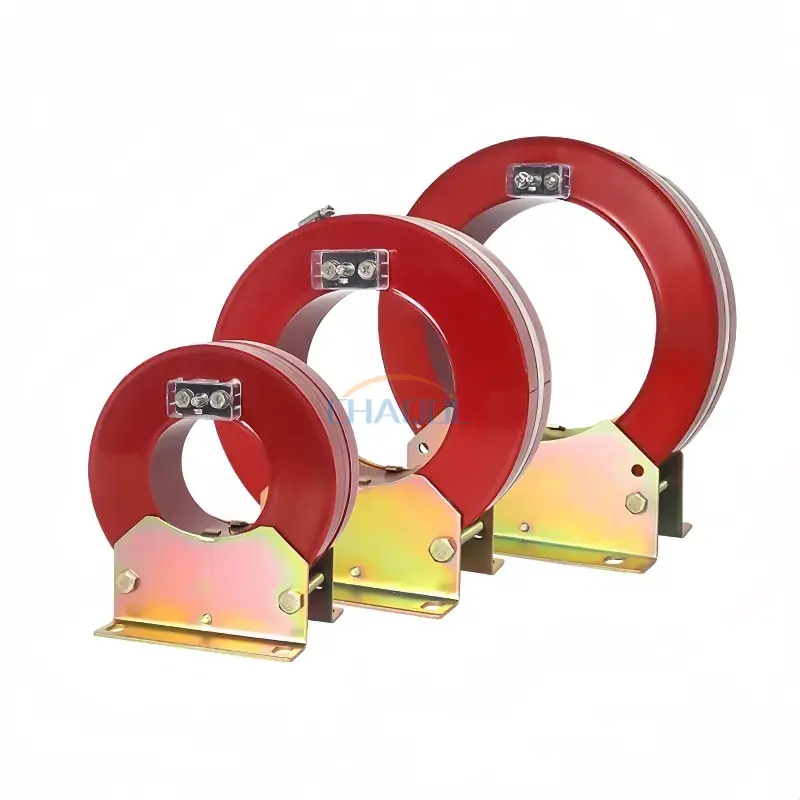
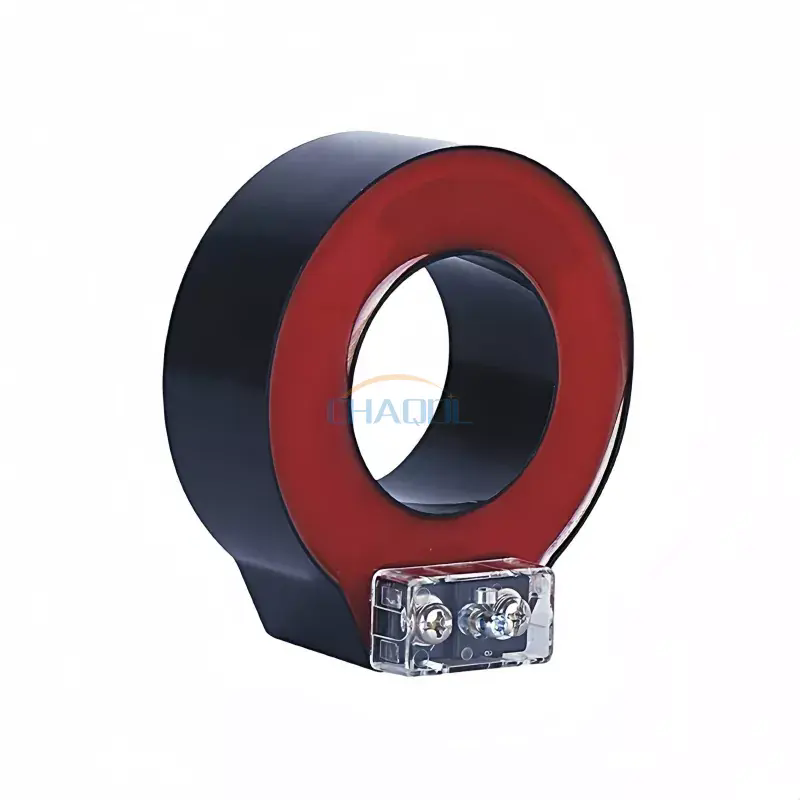
As a professional power equipment manufacturer, Anqiang Power provides a reliable Zero Sequence Current Transformer designed to detect residual current and support earth fault protection in power distribution systems. Its split-core structure, stable magnetic performance, and convenient installation make it suitable for protection and monitoring applications where fast fault detection and dependable operation are essential.

A Zero Sequence Current Transformer is a specialized current transformer used to detect residual or zero-sequence current caused by current imbalance and earth faults. Unlike conventional current transformers that primarily measure individual phase currents, this device monitors the combined current passing through the transformer core. Under normal operating conditions, the vector sum of the monitored currents is close to zero. When an earth fault or leakage path occurs, the balance changes and a residual current is detected. This signal can then be transferred to a protection relay to initiate an appropriate protective action.

For industrial distribution networks, substations, switchgear assemblies, and retrofit projects, selecting the right transformer requires attention to core design, aperture size, insulation, installation method, accuracy, relay compatibility, and environmental conditions. A properly selected Zero Sequence Current Transformer can improve fault monitoring while helping protection systems respond more effectively.

Zero Sequence Current Transformer

Table of Contents

What Is a Zero Sequence Current Transformer?

How Does a Zero Sequence Current Transformer Work?

What Are the Key Features of a Modern Zero Sequence Current Transformer?

Where Is a Zero Sequence Current Transformer Used?

How Should You Select the Right Transformer?

What Should Be Considered During Installation?

Product Specifications and Selection Reference

Frequently Asked Questions

Conclusion


What Is a Zero Sequence Current Transformer?

A Zero Sequence Current Transformer, often called a core-balance current transformer or residual current transformer, is designed to detect current imbalance within an electrical circuit. Its primary application is identifying residual current associated with earth faults, insulation problems, or leakage paths.

The operating concept is different from that of a conventional phase current transformer. Instead of measuring only one conductor, the conductors belonging to the protected circuit pass through the magnetic core. When the currents flowing through the conductors are balanced, their magnetic effects largely cancel each other. When a fault causes current to flow through an unintended path, a residual magnetic field develops in the core and the secondary winding produces a corresponding signal.

This operating principle allows the transformer to work together with protection relays and other monitoring equipment. For electrical engineers and system integrators, the device therefore serves as an important sensing component within an overall earth fault protection scheme.


How Does a Zero Sequence Current Transformer Work?

The working principle is closely related to Kirchhoff's Current Law. In a balanced three-phase circuit, the vector sum of the phase currents is theoretically zero:

Ia + Ib + Ic = 0

Consequently, the magnetic flux generated inside the core is minimized and the secondary output remains very small.

When an earth fault occurs, part of the current leaves the intended circuit through an unintended path. The current balance is therefore disturbed:

Ia + Ib + Ic ≠ 0

The resulting residual current creates magnetic flux in the core. The secondary winding then generates an electrical signal that can be detected by a protection relay.

A typical protection sequence can be summarized as follows:

  • The electrical circuit operates normally under balanced conditions.
  • The conductors pass through the magnetic core of the transformer.
  • An insulation failure or earth fault creates residual current.
  • The transformer detects the resulting magnetic imbalance.
  • The secondary winding generates a corresponding output signal.
  • The protection relay evaluates the signal and initiates the required protective action.

This process allows a protection system to identify abnormal residual current without relying solely on measurements from individual phase current transformers.


What Are the Key Features of a Modern Zero Sequence Current Transformer?

For industrial electrical applications, mechanical construction and electromagnetic performance are equally important. Anqiang Power's LXK series uses a split-core design with epoxy resin vacuum casting, allowing the transformer to be installed around existing primary cables without requiring cable removal. This can be particularly valuable for retrofit and maintenance projects where minimizing downtime is a priority.

Several characteristics should be considered when evaluating this type of transformer:

  • Split-core construction: Enables installation around existing cables and improves field installation convenience.
  • Epoxy resin insulation: Provides mechanical support and insulation for the transformer assembly.
  • Cold-rolled silicon steel core: Supports stable magnetic characteristics and efficient current sensing.
  • Oxygen-free copper winding: Helps provide stable secondary performance and reduced electrical losses.
  • Compact structure: Makes the transformer suitable for distribution cabinets, switchgear, and protection panels.
  • Flexible aperture options: Different inner diameters can accommodate different cable arrangements.

These characteristics make split-core designs especially practical when upgrading existing electrical infrastructure without extensive modification of the primary circuit.


Where Is a Zero Sequence Current Transformer Used?

A Zero Sequence Current Transformer can be integrated into a wide range of power distribution and protection systems. Its primary role is to provide residual-current information to protection or monitoring equipment.

Typical applications include:

  • Medium-voltage distribution networks
  • Substations and distribution cabinets
  • Ring main units
  • Transformer protection systems
  • Circuit breaker protection panels
  • Industrial switchgear assemblies
  • Earth fault protection systems
  • Electrical retrofit and maintenance projects

For example, in a distribution cabinet, the transformer can monitor the conductors feeding a downstream circuit. If insulation deterioration causes current to flow toward earth, the resulting residual current can be detected and transmitted to a protection relay. The relay can then determine whether the measured condition requires circuit interruption.

This approach is valuable because early detection of abnormal current conditions can help reduce the risk of equipment damage, extended downtime, and electrical safety incidents.


How Should You Select the Right Transformer?

Choosing a Zero Sequence Current Transformer should not be based on aperture size alone. Engineers should evaluate the electrical system, installation environment, protection relay, and mechanical arrangement together.

Selection Factor What to Consider Why It Matters
Core Aperture Match the inner diameter with the cable or conductor arrangement Ensures practical installation and sufficient clearance
System Voltage Confirm compatibility with the electrical system Supports appropriate insulation and safe operation
Residual Current Determine the expected detection range Helps ensure suitable protection sensitivity
Relay Compatibility Check secondary output and relay requirements Ensures the protection system can correctly interpret the signal
Installation Method Consider solid-core or split-core construction Split-core models are advantageous for retrofit applications
Environmental Conditions Temperature, pollution level, humidity, and installation location Supports reliable long-term operation

For retrofit applications, a split-core transformer can offer a significant practical advantage because technicians can generally install it around an existing cable arrangement rather than completely dismantling the primary circuit.


What Should Be Considered During Installation?

Correct installation is essential for reliable residual-current measurement. The conductor routing through the transformer aperture should follow the protection design so that the transformer measures the complete current relationship of the protected circuit.

Before installation, engineers should verify:

  1. The transformer aperture is large enough for the intended cable arrangement.
  2. All required conductors are routed correctly through the core according to the protection scheme.
  3. The secondary terminals are connected to the specified relay or monitoring device.
  4. The insulation and grounding arrangements comply with the system design.
  5. The installation environment falls within the specified operating conditions.
  6. The transformer is mechanically secured to prevent movement or vibration.
  7. Protection relay settings are coordinated with the expected residual-current characteristics.

For the referenced LXK series, the stated normal operating conditions include indoor installation, an ambient temperature range of -5°C to 40°C, and non-corrosive, low-pollution environments. Engineers should always confirm the actual project conditions against the selected product's technical documentation before installation.


Product Specifications and Selection Reference

Anqiang Power's LXK series provides multiple aperture options to accommodate different primary cable arrangements. The available dimensions range from approximately 80 mm to 300 mm, giving engineers flexibility when integrating the transformer into existing distribution equipment.

Model Aperture D Dimension E Dimension L Dimension L1
LXK-80 Φ80 58 mm 130 mm 123 mm
LXK-100 Φ100 58 mm 130 mm 122 mm
LXK-120 Φ120 57 mm 130 mm 120 mm
LXK-150 Φ150 58 mm 190 mm 123 mm
LXK-180 Φ180 58 mm 190 mm 125 mm
LXK-200 Φ200 60 mm 280 mm 129 mm
LXK-240 Φ240 80 mm 280 mm 167 mm
LXK-260 Φ260 55 mm 280 mm 120 mm
LXK-300 Φ300 80 mm 280 mm 170 mm

For detailed product information, engineers can review the Zero Sequence Current Transformer product page and compare the available aperture sizes with the physical requirements of the installation.


Frequently Asked Questions

What is the main purpose of a Zero Sequence Current Transformer?

Its primary purpose is to detect residual or zero-sequence current associated with earth faults and current leakage. The output can be connected to a protection relay for monitoring and fault isolation.

Can a split-core transformer be installed without removing the primary cable?

Yes. A split-core construction is specifically advantageous for retrofit and maintenance applications because the transformer can be assembled around an existing cable without requiring the primary cable to be disconnected.

What is the difference between a conventional current transformer and a zero-sequence transformer?

A conventional current transformer generally measures current in an individual conductor, while a zero-sequence transformer detects the residual current resulting from the vector relationship of the conductors passing through its core.

Where can this type of transformer be installed?

Typical applications include distribution cabinets, substations, ring main units, transformer protection systems, switchgear assemblies, and circuit breaker protection panels.

What factors should engineers check before purchasing?

Important factors include core aperture, electrical system requirements, expected residual current, secondary output, relay compatibility, insulation requirements, installation method, and environmental conditions.


Conclusion

A Zero Sequence Current Transformer is a critical sensing component for modern earth fault detection and electrical protection systems. By monitoring the residual current created when the normal current balance is disturbed, it provides protection relays with valuable information for identifying abnormal operating conditions. Split-core construction further improves installation flexibility, especially in retrofit and maintenance projects.

For projects requiring dependable residual-current detection, Anqiang Power offers LXK series solutions with multiple aperture sizes, epoxy resin vacuum casting, cold-rolled silicon steel cores, and oxygen-free copper windings. If you are selecting a suitable transformer for a distribution network, switchgear assembly, or protection system, contact us to discuss your technical requirements and find a suitable Zero Sequence Current Transformer solution for your application.

Related News
Leave me a message
X
We use cookies to offer you a better browsing experience, analyze site traffic and personalize content. By using this site, you agree to our use of cookies. Privacy Policy
RejectAccept